The Importance of Drainage for Commercial Flat Roofs

Flat Roofs & Water Management:
Why Proper Drainage Is Essential for Your Business
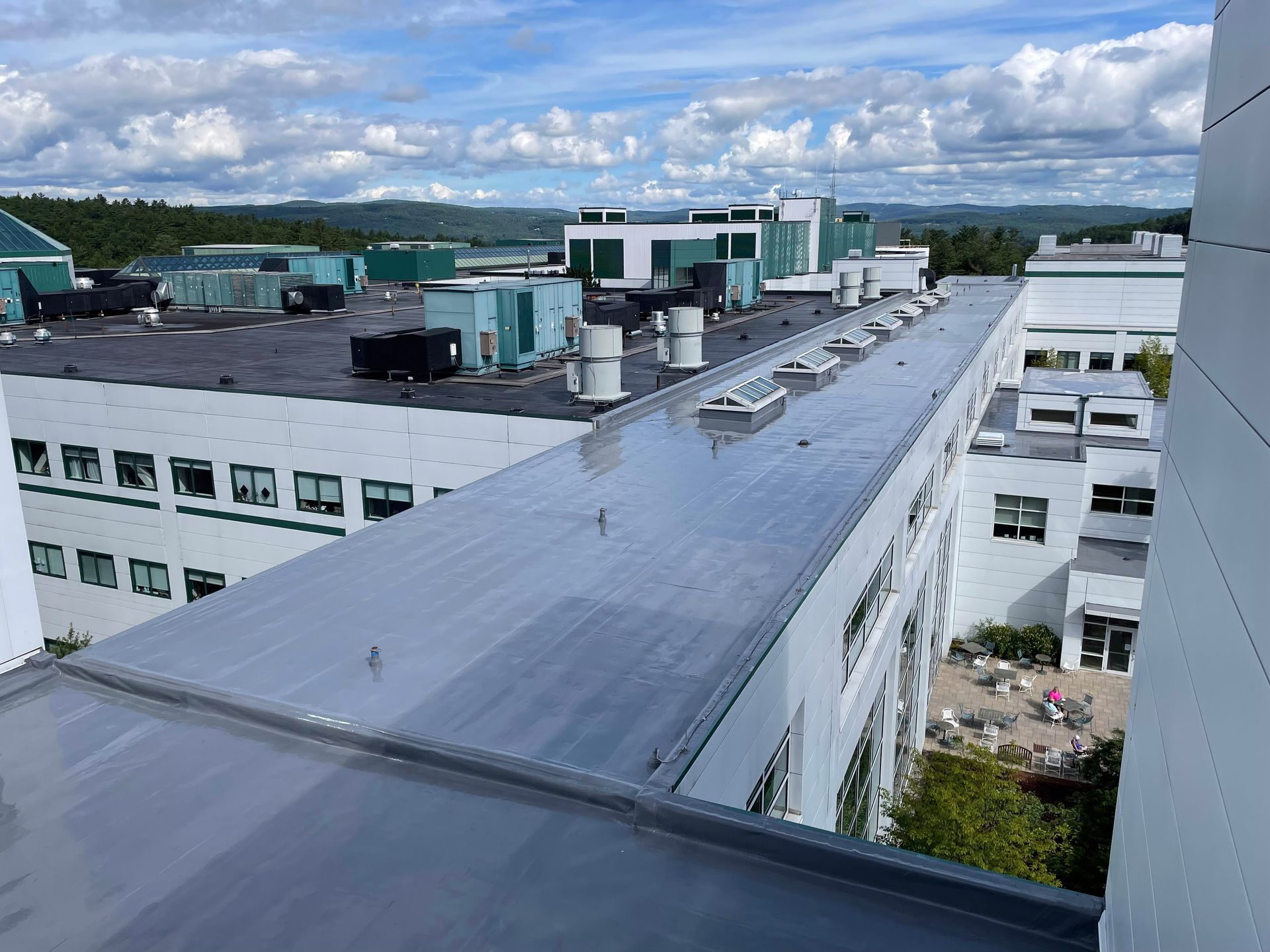
Flat roofing systems are a popular choice for commercial buildings due to their cost-effectiveness, space utility for HVAC systems, and ease of maintenance. However, the very feature that defines them—their minimal slope—also makes effective drainage crucial. Proper drainage is not merely an additional feature; it's a vital component that ensures the longevity and functionality of a flat roof. In this article, we'll explore why drainage is paramount for commercial flat roofs and how neglecting it can lead to significant problems.
Preventing Water Accumulation
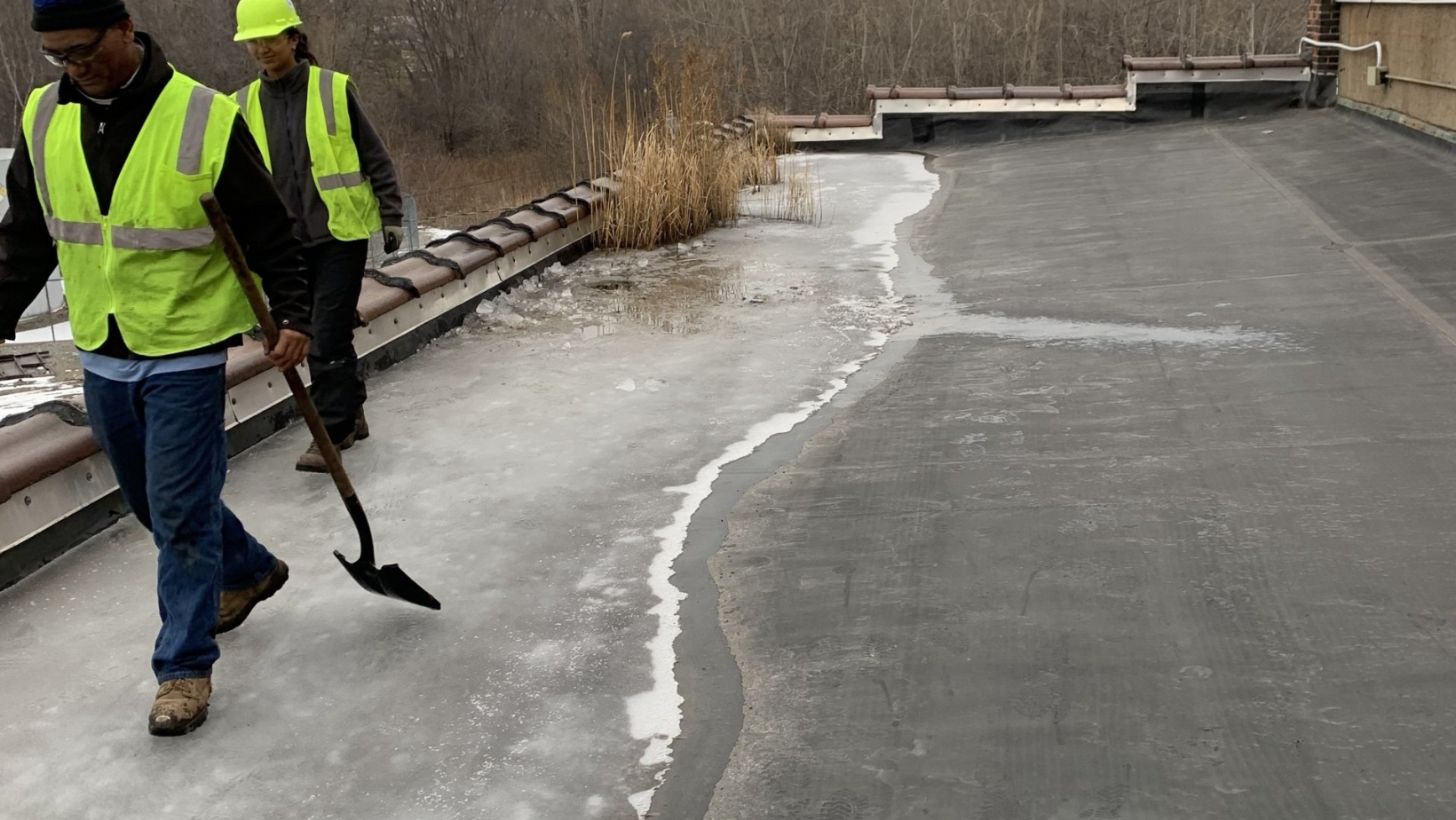
The primary purpose of an efficient drainage system is to prevent water from pooling on the roof's surface. Unlike sloped roofs, flat roofs don't naturally allow water to run off quickly. Pooled water can lead to leaks, structural damage, and a reduced lifespan of the roofing material. It's not just about immediate water removal; it's about preserving the roof's integrity over time.
Avoiding Structural Damage
Water is surprisingly heavy. Just one inch of standing water weighs approximately five pounds per square foot, placing an enormous strain on the roof structure. Over time, this weight can compromise the structural integrity of the building, leading to sagging, cracking, or even collapse in severe cases. Efficient drainage removes this weight and reduces the risk of structural damage, ensuring the building remains safe and secure.
Reducing the Risk of Mold and Algae Growth
Stagnant water is a breeding ground for mold, algae, and bacteria. These organisms can not only damage roofing materials but also pose health risks to the building's occupants. Effective drainage keeps the roof dry and inhibits the growth of these harmful elements, maintaining a healthier environment both inside and out.
Extending Roof Life
Moisture is the enemy of almost every roofing material. Over time, water can cause roofing membranes to break down, insulation to become waterlogged, and metal components to rust. Proper drainage extends the lifespan of these materials, ensuring that your roof protects your building for as long as possible. This not only saves money on premature replacement costs but also ensures continuous protection from the elements.
Ensuring Compliance & Reducing Liability
Building codes often specify drainage requirements for commercial roofs to prevent water accumulation. By ensuring your drainage system is up to code, you're not just protecting your building; you're also minimizing your liability. A well-designed drainage system can prevent accidents related to water leakage or structural failures, which could otherwise lead to legal and financial repercussions.
The importance of drainage for commercial flat roofs cannot be overstated. It's a critical aspect that requires careful consideration during the design, installation, and maintenance phases. Investing in a high-quality drainage system pays dividends by protecting your building from water damage, extending the lifespan of your roof, and ensuring the safety and health of its occupants.
For building owners, regular inspections and maintenance of the roof's drainage system are essential practices. At our roofing company, we specialize in providing comprehensive roofing solutions, including the design and maintenance of efficient drainage systems for commercial flat roofs. Protect your investment and ensure your building's safety by prioritizing proper roof drainage.