
Single-Ply Membranes & Installation
Single Ply Membranes & Installation
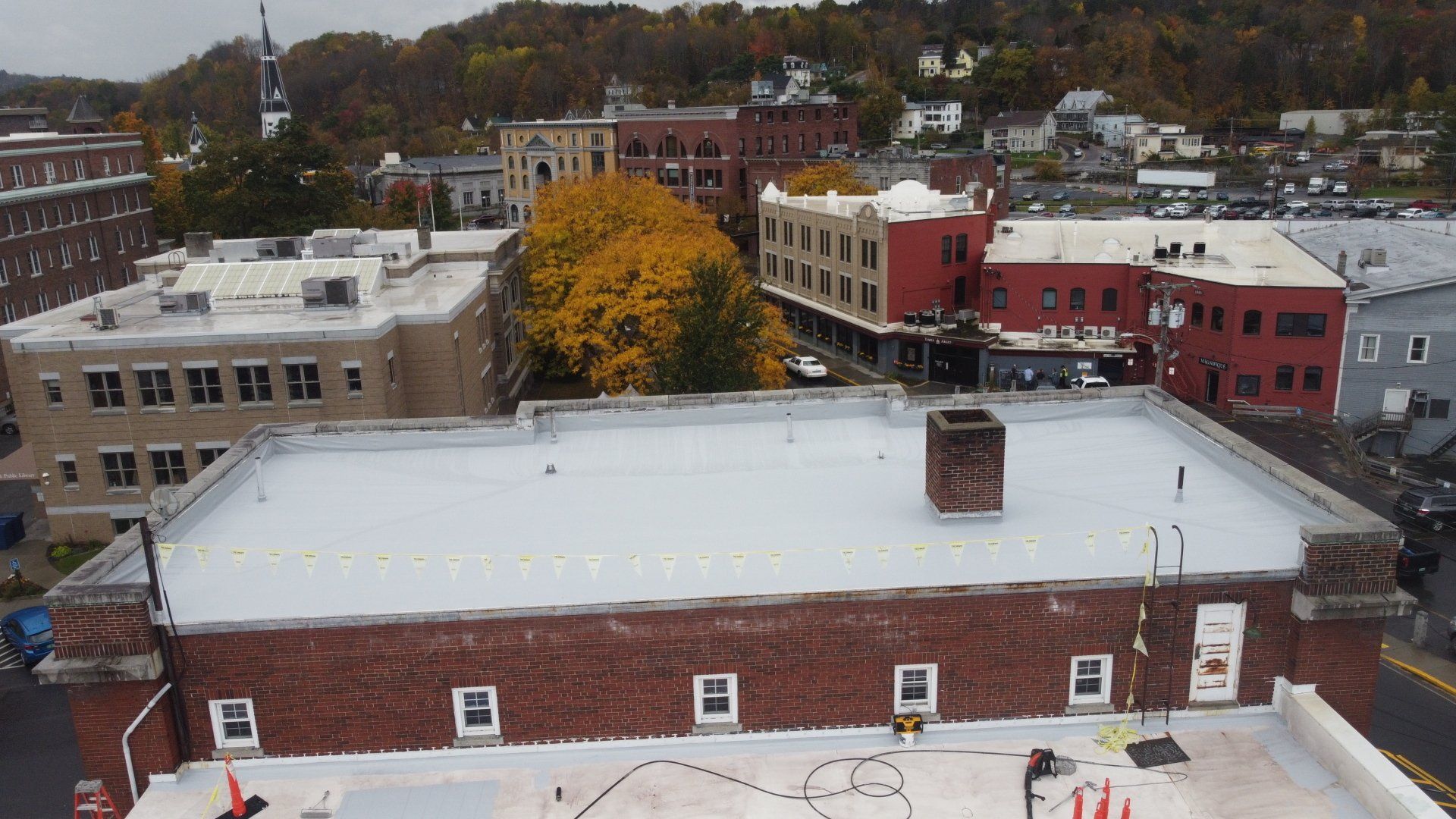
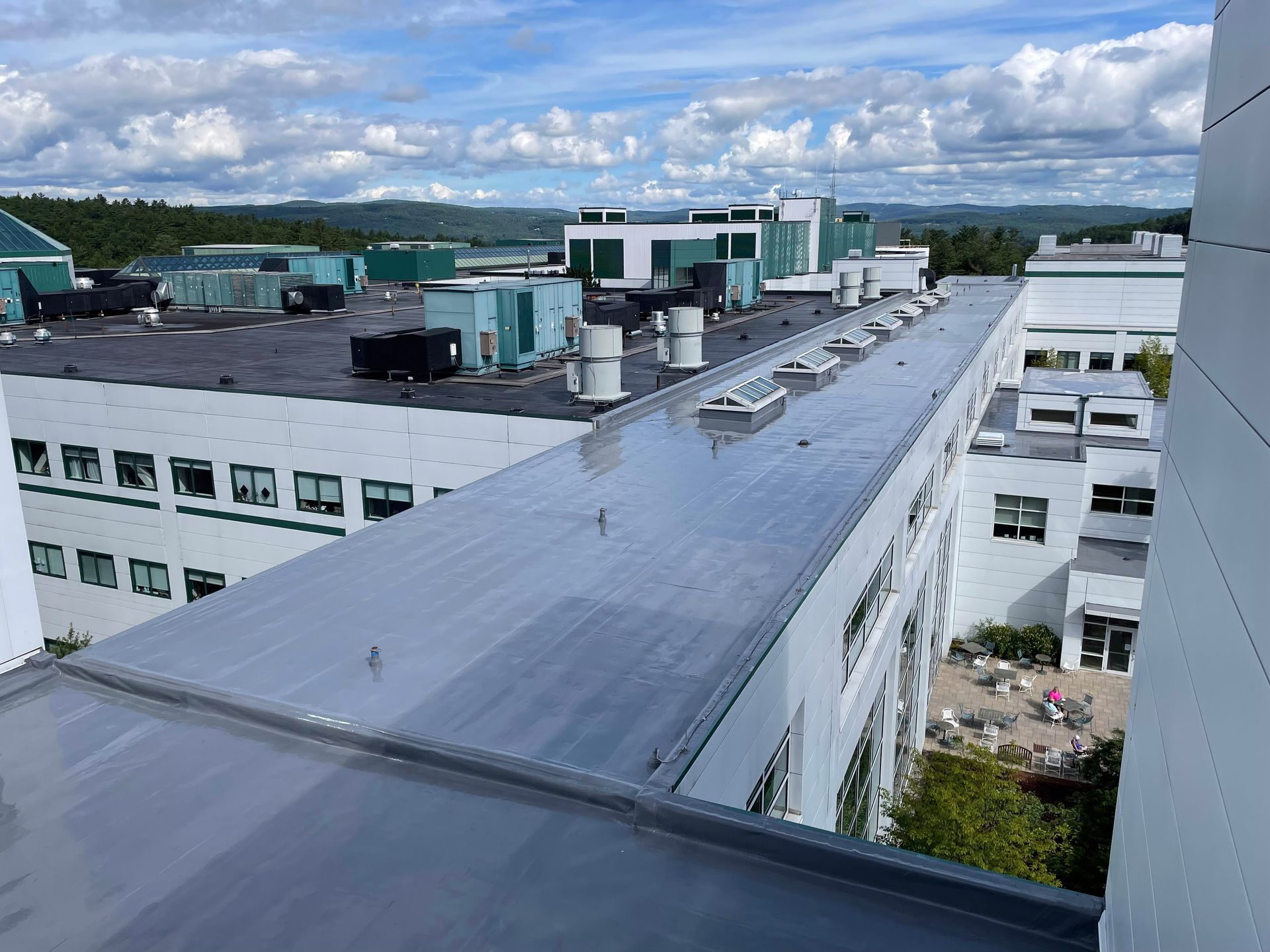
Single Ply commercial roofing systems offer a wide range of materials to select from, making it a practical choice for building owners across the country. As an industry, there are three categories of single ply roofing membranes, though the two most common are referred to as thermosets and thermoplastics. These membranes can be defined by the type of polymers and other materials from which they are made.
Thermoset membranes are comprised of rubber polymers, the most prevalent being EPDM, which we often call “rubber roofing.” These membranes are a great choice for large roofs that are heavily exposed to sunlight, as their manufacturing size is perfect for decreasing seams and they are known to protect against potentially-threatening sun damage, along with other harmful chemicals that frequently reside on roofs. Thermoplastic membranes are formed from plastic polymers, usually either PVC (polyvinyl chloride) and TPO (thermoplastic polyolefin). These polymers are made pliable by adding an element we call “plasticizers.” Thermoplastic membranes give roofs extra strength and security, as they are made with a reinforcement layer either composed of polyester or fiberglass.
Installation Considerations
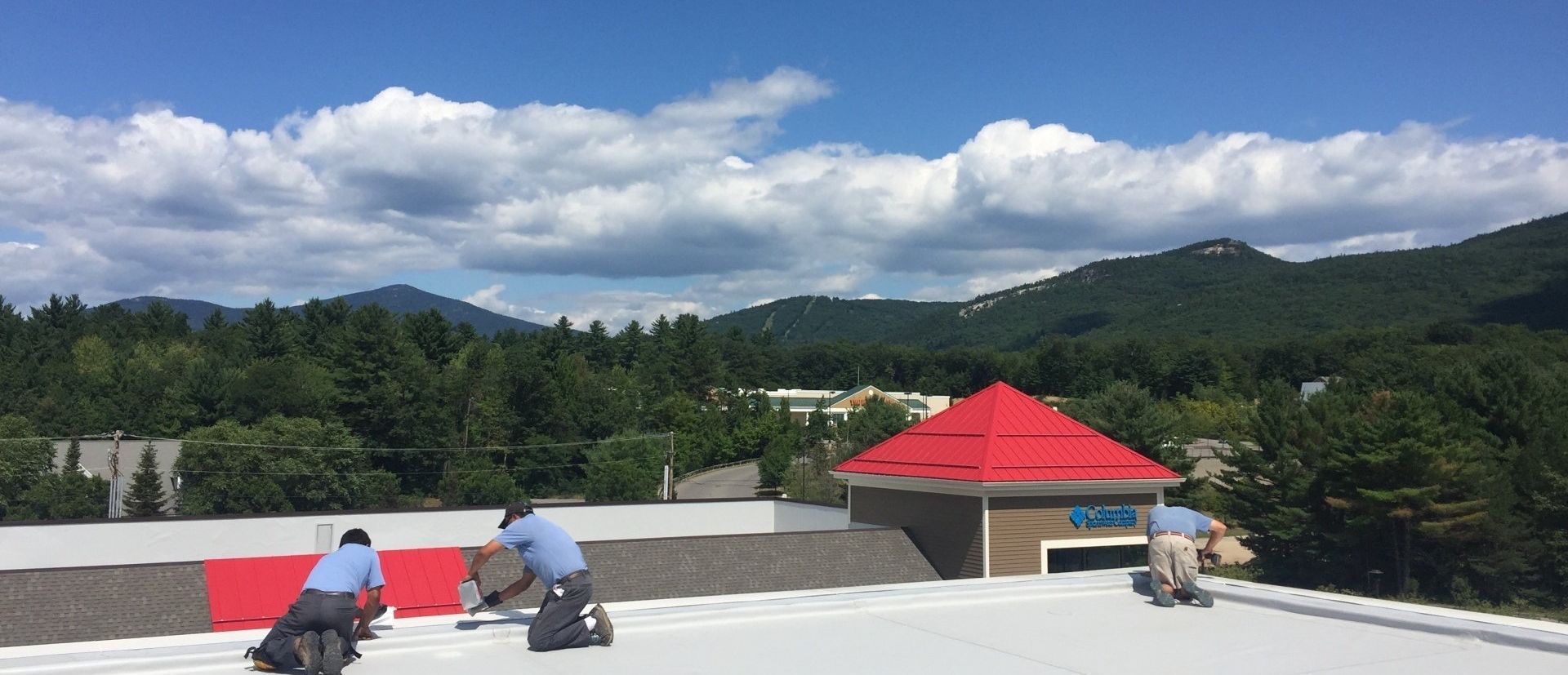
Single-ply membranes of both sorts are installed in the same way. They're either mechanically joined, fully glued with adhesive, or set out loose and held in place by the weight of anything fitted on top of them. In certain instances, each installation method provides advantages.
When weight is a factor, the system should be installed during cooler weather, or the roof should be re-covered, mechanically attached systems are the ideal option. For mechanically attached systems, structural concrete decks are not a good solution. Fastening fasteners into the concrete can cause issues in the future as the roof ages and water penetrates the deck. The fasteners may rust, causing the concrete to splinter.
Because the mechanical attachment is light weight and less likely to overload the precisely built weight restrictions of the building, steel is a great choice for mechanically attached systems, especially when putting a new roofing system over a structural standing seam metal building (metal retrofit). For mechanically fastened systems, wood and cementitious wood fiber make excellent decks.
Drilling through the lightweight into the steel deck to mechanically attach a single-ply membrane to a lightweight insulating concrete deck can eliminate the usage of the lightweight insulating concrete. There are adapted bitumen systems with base sheets and base sheet fasteners specifically designed for lightweight insulating concrete that do not require drilling into the steel deck and are thus substantially less expensive to install.
When choosing a mechanically attached device, keep in mind that the membrane may flutter somewhat in the wind. This is very normal.
Because there are minimal solvents and no hot asphalt to deal with, thermoplastic mechanically attached systems lend themselves to cool-weather installation. However, as with all thermoplastic membranes, the temperature of the heat welding of the seams is crucial for a successful connection, and cool conditions should be considered during welding.
If tape is utilized as the seam adhesive, mechanically applied EPDM is a good contender for cool-weather installation. If the adhesive is maintained warm until immediately before application, contact adhesive seams can be employed. It is taken into account that contact adhesive has a longer set-up time.
When the roof cannot be easily secured with screws or other types of fasteners, such as over a structural concrete deck, fully adherent solutions are the best option. In this scenario, using an adhesive to adhere the insulation to the deck and an adhesive to adhere the membrane to the insulation reduces deck damage.
Because wind cannot get under an adhered membrane as easily as it can under a mechanically fastened one, fully attaching the membrane also helps hold the roof in place in severe winds. When wind gets between the deck and the membrane, it adds a positive pressure to the negative pressure of the wind passing over the membrane, raising the risk of the roof being ripped off the building. The flutter that can arise in a mechanically attached system can be eliminated by fully attaching a single-ply membrane.
Thermoplastic membranes are normally adhered with proprietary adhesives, while EPDM systems are adhered with contact adhesive. If a fully adherent system is chosen, the adhesive type must be analyzed to ensure that it is appropriate for the system in question.
A fleece backing can be provided for some single-ply membranes. The fleece may make it possible to apply the membrane on hot asphalt. In a re-cover over a built-up or modified bitumen system, this can ensure compatibility with the underlying roof system. It's also handy when hot mopping insulation to the deck is the only option.
The fleece backing additionally thickens and stabilizes the membrane. When installing a PVC roof that looks like a standing seam metal roof, this is especially useful when requesting applied ribs. When the ribs are heat-welded on, the fleece will create fewer waves in the membrane.
When installing a protected membrane roof with the membrane installed under the insulation, ballasted systems are a smart choice. Ballasting is also a useful option for green roofs since the growing medium, which is typically dirt, can assist keep the roof in place if it is thick enough. Because the pavers supply the weight to hold the membrane in place, a ballasted system is also a smart way to offer a plaza deck walking surface. With ballasted systems, more caution must be exercised to ensure that the building's structural structure is capable of supporting the overburden (pavers, stone, soil) without collapsing. In most cases, structural concrete is capable of doing so. Before implementing this type of technology, all buildings should be thoroughly inspected by a structural engineer.
Although single-ply membranes are less expensive than other roof systems, cost should never be the deciding factor. A determination of which roof best suits the needs of the building should influence the decision.
A poor choice can result in an expensive disaster for any sort of roofing system. With so many options, choose which single-ply to use might be challenging. The choice is made considerably more difficult by building laws, regulations, and insurance needs. Single-ply membranes, on the other hand, can provide a long-lasting roof system at a reasonable cost if roofing needs are adequately assessed and supplies are appropriately chosen.