Why Commercial Roof Drainage Matters
Commercial Roof Drainage Systems
Preventing Ponding Water, Leaks, and Costly Repairs
When it comes to commercial roofing, proper drainage is one of the most important factors in protecting a building. While roofing materials, installation quality, and routine maintenance all play important roles, even a well-built roof can experience problems when water isn't draining properly.
For commercial property owners and facility managers throughout Vermont and New Hampshire, understanding how roof drainage works can help prevent water damage, extend roof life, and reduce unexpected repair expenses.
Why Drainage Is Especially Important for Flat Roofs
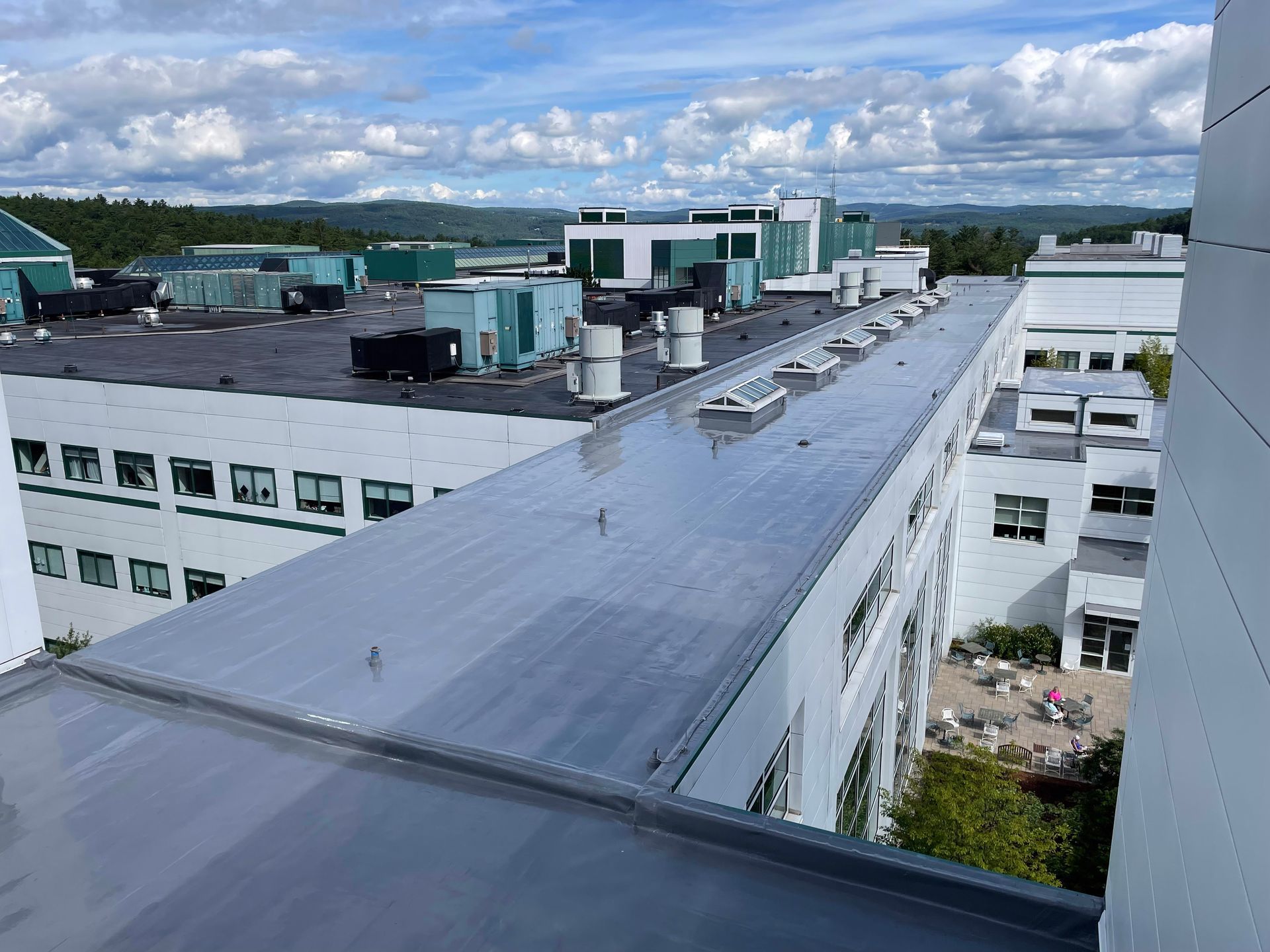
Many commercial buildings feature flat or low-slope roofing systems. Although these roofs may appear completely level, they're designed to direct water toward drains, scuppers, or gutters.
When drainage systems become blocked or aren't functioning properly, rainwater and melting snow can collect on the roof's surface.
This standing water, commonly called ponding water, can place additional stress on roofing materials and increase the likelihood of leaks, particularly when existing seams or flashing have deteriorated.
The Hidden Costs of Poor Roof Drainage
Drainage problems don't always cause immediate, visible damage. Over time, however, persistent moisture can contribute to larger roofing concerns.
Common consequences include:
- Roof membrane deterioration: Prolonged water exposure can accelerate wear in vulnerable areas.
- Interior water damage: Leaks can affect ceilings, insulation, equipment, and interior finishes.
- Additional structural stress: Accumulated water adds weight to the roofing system.
- Premature repairs: Recurring moisture problems can increase maintenance needs and shorten roof service life.
Addressing drainage issues early can help prevent minor concerns from becoming expensive repairs.
Vermont Winters Create Additional Challenges
Commercial roofs in Vermont and New Hampshire face particularly demanding weather conditions.
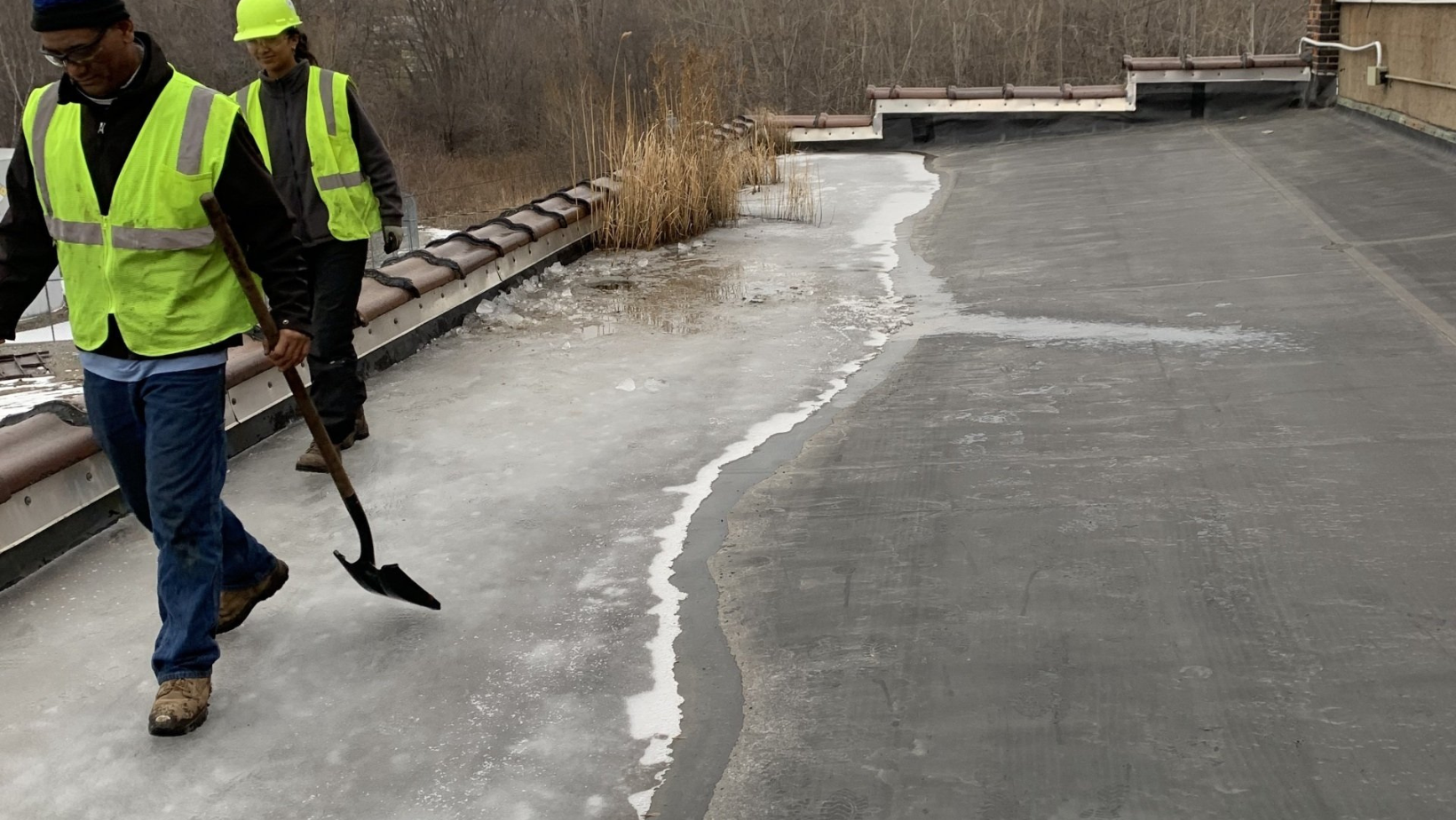
Heavy snowfall, ice accumulation, and repeated freeze-thaw cycles can interfere with drainage systems. When snow melts during warmer periods and temperatures drop again, water may refreeze around drains, gutters, and other drainage points.
Blocked drainage can allow additional water to accumulate, increasing the risk of leaks and unnecessary stress on the roof.
This makes drainage inspections especially important before winter and during seasonal transitions.
How Regular Maintenance Helps
Routine commercial roof maintenance should include evaluating drainage components and identifying areas where water may collect.
Important maintenance tasks include:
- Clearing leaves, branches, and debris from drains
- Inspecting gutters, downspouts, and scuppers
- Checking for recurring ponding water
- Examining flashing and seams near drainage areas
- Evaluating drainage performance after major storms
A professional inspection can also help identify whether recurring drainage problems indicate underlying slope or roofing system concerns.
Protect Your Commercial Roof With Rodd Roofing
Proper drainage is essential to maintaining a reliable commercial roofing system. Staying ahead of blockages, standing water, and seasonal damage can help protect your building and avoid unnecessary disruptions.
With over a century of roofing experience, Rodd Roofing provides commercial roof inspections, repairs, and preventative maintenance throughout Vermont and New Hampshire.
Concerned about your commercial roof's drainage? Contact Rodd Roofing today to schedule an inspection and keep your roofing system performing throughout the year.