Is a Solar Energy System Suitable for Your Business's Roof?
Your business & Solar Panels: Learning about Solar
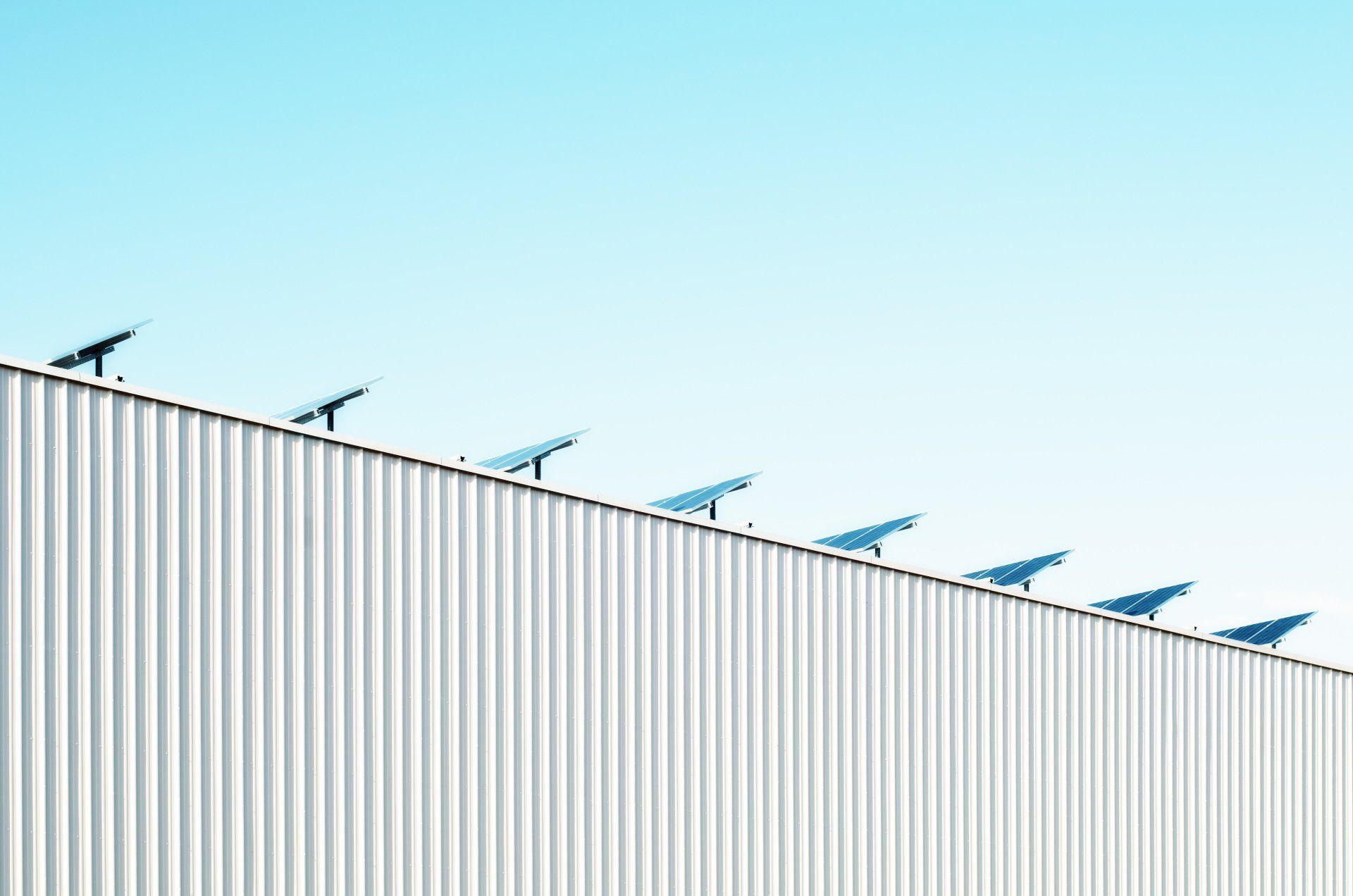
Commercial building owners are discovering the efficacy of using solar energy to reduce overhead costs as solar roofing systems become more affordable and less onerous.
What is a Solar Roof?
A solar roofing system (also known as a PV or photovoltaic system) converts photons (light-emitting particles) into electricity that can be used to power the building on which it is mounted. Solar energy conversion was first identified and used in the late 1800s, and it is still evolving and progressing today.
Individual solar cells are made up of layers of silicon, phosphorus, and boron, which combine to form a balance of positive and negative charges, absorb photons, and produce useful energy. The photovoltaic effect is the name given to this process. More electricity is produced than is needed in a day in a well-built solar energy system, allowing power storage to build up and be used for nighttime electricity or sold into the local power grid (net metering).
Types of Solar Options
Solar panels are installed on an existing roof, which is a benefit for building owners who do not want to replace the complete roof. The technology is cost-effective, well-established, and dependable; yet, some people believe that solar panels' visual appeal is lacking because they're only available in black or blue and are attached on top of the roof using a bracket system.
Solar panels are a well-established technology that is simple to install by installers with years of experience, and they do not need to cover the entire roof to be useful. Furthermore, while some may find the bracketing method unappealing, it allows the individual panels to be changed to catch the most direct sunlight.
Solar Panel Attachment Methods
Ballasted Racking: This approach anchors the PV system to the flat roof with concrete blocks. The hybrid ballasted racking system, which uses mechanical fasteners in addition to the heavy blocks to secure the system to the roof, is another form of the ballasted racking system. It's heavy, like all types of ballasted roofing, and it necessitates a strong structural foundation to sustain the weight of the ballast and the PV system.
Attached Racking: This approach attaches the PV system to the roof with roof-penetrating bolts. This approach can be utilized on low-slope or flat roofs, though local building codes will determine whether a particular roof is suitable.
Benefits of Solar Roofing
Regardless of the size of your structure, solar roofing is a wonderful option. A solar roofing system can deliver the same benefits to your business whether your building's roof is large or tiny.
Financial benefits
- Solar roofing can offer a high return on investment and should be viewed as an investment rather than a cost. The following are some of the most noteworthy financial advantages of investing in a PV system:
- They're reasonably priced. PV system installation costs have dropped considerably since the early 2010s; depending on the region, the initial cost might be up to 70% lower than it was a decade ago. PV systems have never been more economical than they are in 2020, thanks to ongoing energy cost savings, possibly cash rebates, and tax benefits. Inquire about the various financing options available.
- Savings on energy costs. Solar roofing systems have been found to save up to 89 percent in monthly energy expenses for businesses of all sizes. These roofing solutions often more than pay for themselves during the life of the roof because they can provide the majority of the electricity required for normal building operations.
- Property value has increased. PV systems provide significant value to commercial buildings, and those that have them sell faster and for more money than those that do not.
- Incentives are tax breaks. Owners of new commercial and residential PV systems will be eligible for the Solar Investment Tax Credit (ITC) beginning in 2020, which offers a 26 percent federal tax credit if the panels are installed by the end of the year. Businesses can receive an immediate first-year discount on new PV systems thanks to a 100 percent bonus depreciation.
- Additional sources of income. Commercial buildings that generate more energy than they require for regular operations may be able to sell the excess electricity back to the power company, generating cash that can help offset the cost of a new system installation.
- Advantages in the marketplace. Potential consumers and neighborhood members frequently look favorably on businesses that use solar energy. Furthermore, the system's cost savings may enable the company to price its goods and services more competitively than competitors in the same industry, as well as transfer cost savings to marketing, customer service, or quality control budgets.
Aesthetics
While early versions of solar roofing systems were big and unattractive, today's solar options include photovoltaic shingles, which look like ordinary roofing tiles and come in a range of textures, colors, and attachment techniques to match the intended aesthetic of the structure.
Durability
Commercial PV systems are low-maintenance, do not pollute the environment, and are weather-resistant. With protective tempered glass and corrosion-resistant metal framing, the solar cells are powerful enough to endure wind, rain, snow, and hail. Furthermore, PV systems are more dependable than traditional electricity and will continue to deliver power even if the grid is down.
Eco-friendly
Buildings account for almost 40% of CO2 emissions in the United States, far higher than automobiles, which account for roughly 33%. Businesses may lower their carbon footprint, contribute to a reduction in the urban heat island effect, and improve the quality of the environment for the entire community by installing a solar-powered roofing system.