
8 Roof Edge Failure Factors

8 Roof Edge Failure Factors

commercial roof

Low-slope roofs are subjected to Mother Nature's wrath on a regular basis. High winds, torrential rains, powerful UV rays, and large snow loads can all cause havoc on a roof's edges.


Problems along the roof's perimeter account for more than half of all roof edge failure issues. We've developed a list of eight of the most typical roof edge failure triggers that shorten roof life.


1. Failure to allow for expansion.

Temperature fluctuations cause the metal roof edge to expand and contract. When a skilled roofing contractor installs a roof, they should plan for material movement. Expansion damage is more likely if the installation team skimps on the metal gauge.


2. Failure to install roof edge in accordance with industry standards.

Building codes require roofing companies to comply with minimum construction standards. If your roof edge does not meet ES-1 standards, the useful life of the roof is at risk.


3. Failure to use compatible metals.

Corrosion can be triggered by the indiscriminate use of certain metals, possibly shortening roof edge life.


4. Failure to use the right fasteners.

The roof edge installer must use the proper fasteners for the type of roof edge being placed. Fasteners should be corrosion-resistant and difficult to remove.


5. Failure at the flashing.

Water damage beneath the flashing can be caused by flashing that does not provide appropriate covering of the nailing strip.


6. Failure to consider the local environment.

Different climates necessitate the usage of various roof edge materials. In coastal areas, galvanized metal or aluminum are not suitable choices since they corrode quickly.


7. Failure to use a weather-resistant finish.

If the roof edge metal has been painted in the field and the paint was not designed to withstand UV radiation, the paint may fade or peel, exposing the bare metal.


8. Failure to use a high quality roofing installer.

In the end, the firm that installs your roof is only as excellent as it is. It is not always the case that the lowest bid is the best. Checking the roofing company's references and comparing projected scopes of work can lead to a badly installed roof and high maintenance expenses.
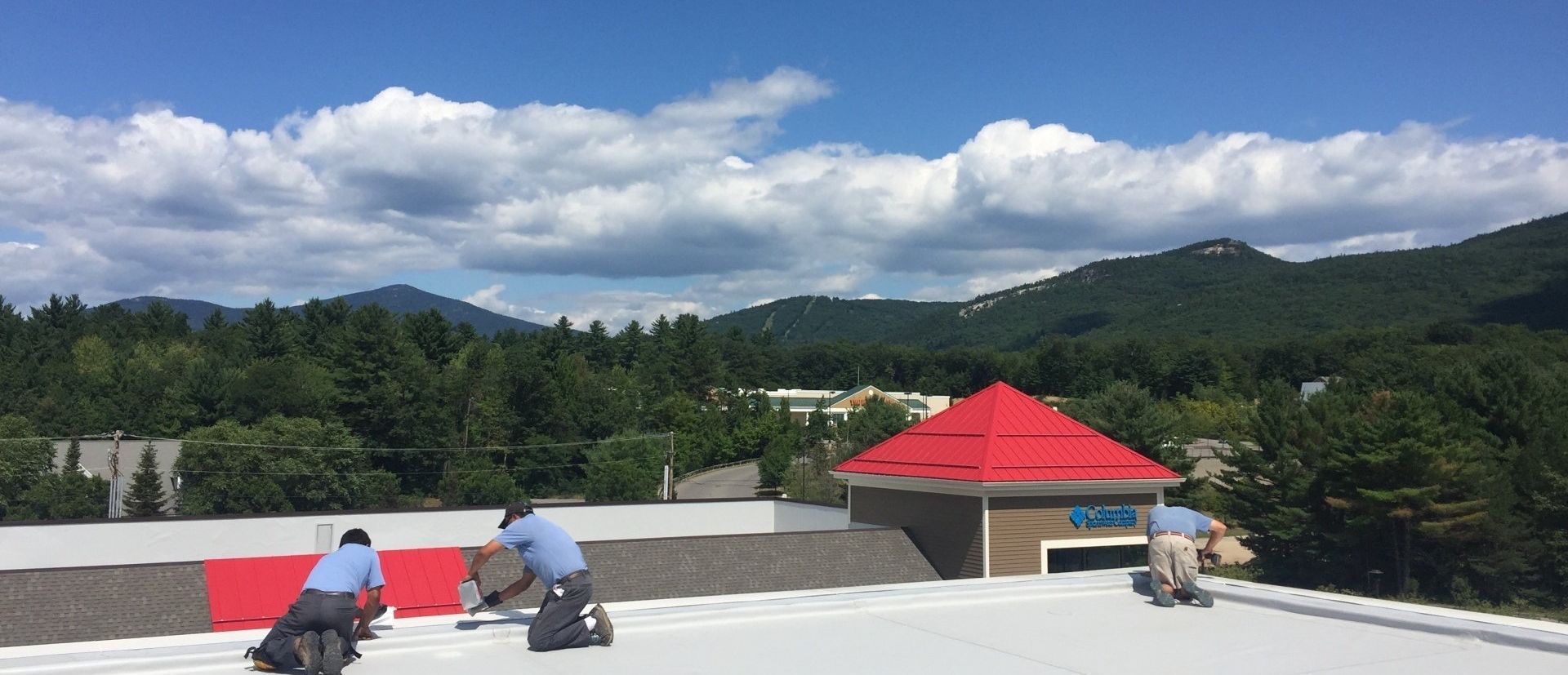
Three people work on installing a white flat roof on a building against a background of mountains and a blue sky.
April 30, 2026
Vermont’s harsh weather can shorten a roof’s lifespan—learn how preventative maintenance plans help protect your building and reduce unexpected repair costs.
April 23, 2026
Not sure whether to repair or replace your roof? Learn the key factors to consider this spring and make the most cost-effective decision.
Raindrops splash onto a dark, wet surface, creating ripples and bubbles in a heavy downpour.
April 16, 2026
Prepare your commercial roof for spring storms by addressing winter damage, drainage issues, and wind risks before costly repairs arise.
Raindrops splash into deep, shimmering puddles on a wet pavement with a blurred red building in the background.
April 9, 2026
Spring rain often exposes roof damage caused by winter—learn the warning signs and why a post-winter inspection can prevent costly repairs.
Melting snow and an icicle hang from a red metal roof under a bright blue sky.
March 26, 2026
As snow melts and temperatures fluctuate, hidden winter roof damage can surface—learn what to look for and why a professional spring inspection is essential.
A low-angle view of shiny metal roofing panels with vertical seams against a bright blue sky with a few clouds.
March 19, 2026
Explore how asphalt, metal, slate, copper, single-ply membranes, and silicone coatings perform in Vermont’s demanding climate.
Icicles hanging from the dark brown edge of an umbrella against a clear blue sky.
March 12, 2026
March is the ideal time to inspect your roof after winter stress—learn what to look for and why scheduling a professional spring evaluation can prevent costly leaks.
March 5, 2026
Ensure your commercial roof drains, scuppers, and gutters are ready for spring storms—prevent ponding water and costly interior damage with proactive maintenance.
Flat, black roof with ice and snow. Brown brick trim, bare trees and a snowy background.
February 26, 2026
February’s freeze-thaw cycles put flat roofs at risk—learn how low-slope pooling, frozen scuppers, and blocked internal drains create hidden hazards and why pre-thaw maintenance is critical.
Worker in safety vest and hard hat chipping ice with a shovel on a commerical roof.
February 19, 2026
Learn how unchecked ice buildup can crack flashings, block drains, and force water under roof seams—causing damage that worsens with every winter freeze-thaw cycle.