
Spring Roof Prep: What Building Owners Should Know in March
Winter's Aftermath:
Preparing Your Roof for Spring Rains and Rising Temperatures
As winter loosens its grip, March becomes one of the most important months for proactive roof maintenance. For commercial and multi-unit property owners, what’s happening above your ceiling right now can directly impact your building’s performance through the rest of the year.
At Rodd Roofing, we often see preventable spring leaks and structural damage that began as minor winter issues. A professional evaluation in March can mean the difference between a simple repair and a costly emergency call in April.
Why March Matters
Winter leaves behind more than just cold temperatures. Snow accumulation, ice buildup, and fluctuating conditions place enormous stress on roofing systems. As daytime temperatures begin to rise and nighttime freezes continue, your roof enters a critical transition period.
Here’s what building owners should be watching for:
1. Ice Dam Remnants
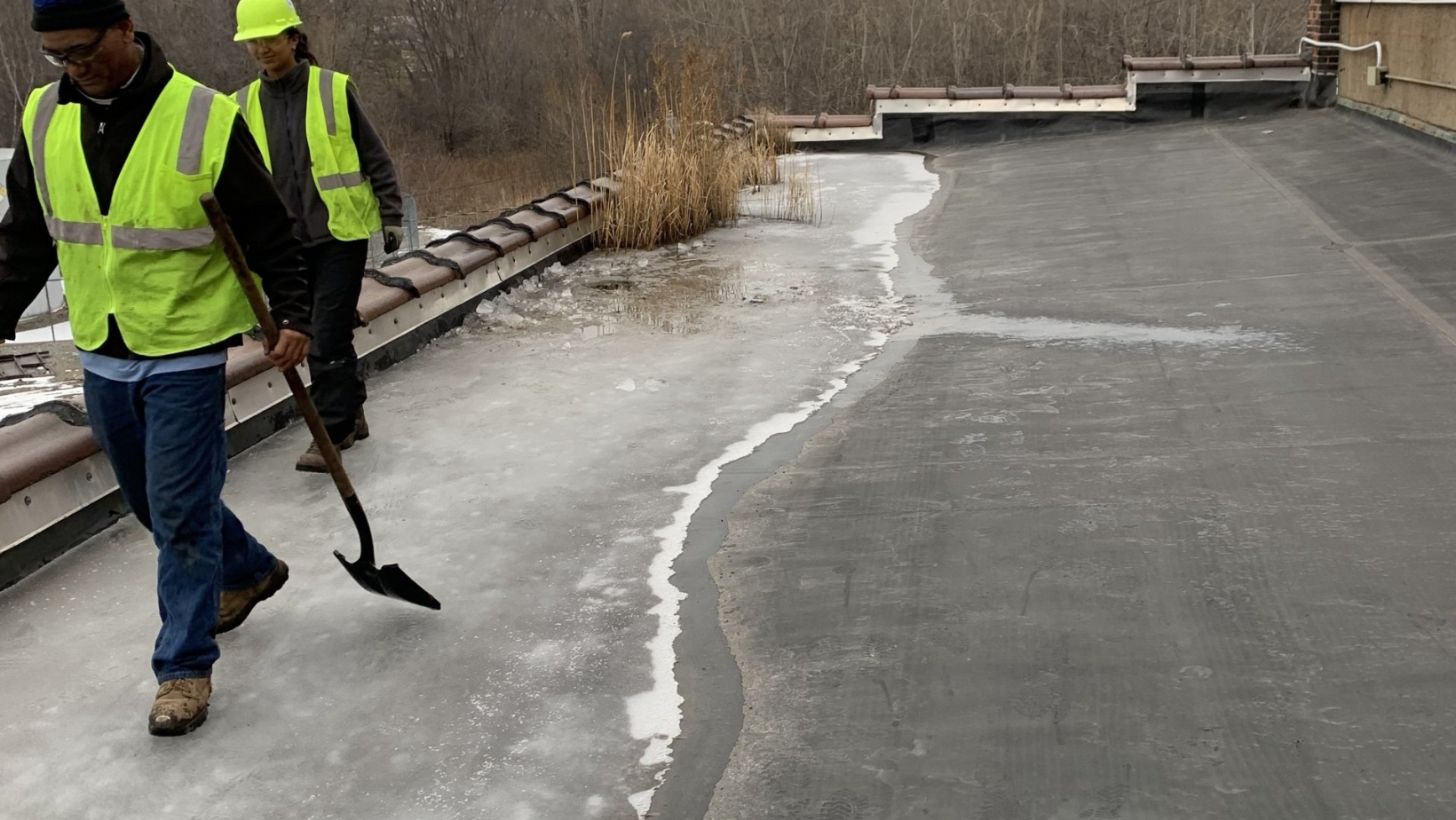
Even after snow has melted, ice dams may have forced water beneath shingles, flashing, or membrane seams. The damage isn’t always immediately visible. Moisture intrusion can sit undetected until spring rains expose it.
2. Freeze-Thaw Cycles
March is notorious for temperature swings. Water trapped in small cracks or seams expands when frozen and contracts when thawed. This repeated cycle widens vulnerabilities in roofing materials, flashing details, and sealants.
3. Debris Buildup
Winter storms often leave drains, scuppers, and gutters clogged with branches, sediment, and roofing granules. As heavy spring rains approach, blocked drainage systems increase the risk of ponding water—one of the leading causes of premature roof failure.
Why a Professional Evaluation Is Critical
Many roofing issues are not visible from the ground—and walking the roof without proper training can be dangerous and may even void warranties.
A professional spring inspection includes:
- Checking membrane integrity and seam performance
- Inspecting flashing at penetrations and rooftop equipment
- Clearing and testing drainage systems
- Identifying early signs of moisture intrusion
- Documenting conditions for budgeting and asset planning
March inspections allow time to address minor concerns before peak rain season begins. Waiting until leaks appear often means interior damage, tenant disruption, and emergency repair pricing.
Proactive Maintenance Protects Your Investment
Your roof is one of your building’s most valuable assets. Treating March as “roof prep month” helps extend system life, protect interiors, and reduce unexpected capital expenses later in the year.
Spring weather is coming—make sure your roof is ready.