
Roof Drainage & Spring Storm Preparedness for Commercial Roofs
Protecting Flat Roofs:
Preparing Drainage Systems for Heavy Spring Rains
For commercial property owners, spring doesn’t just bring warmer temperatures — it brings heavy rainfall, rapid snowmelt, and sudden downpours that can put serious stress on flat and low-slope roofing systems. If drainage isn’t functioning properly, even a well-installed commercial roof can quickly develop problems. We often see preventable spring leaks caused not by roofing failure, but by neglected drainage systems.
Why Drainage Matters So Much on Commercial Roofs
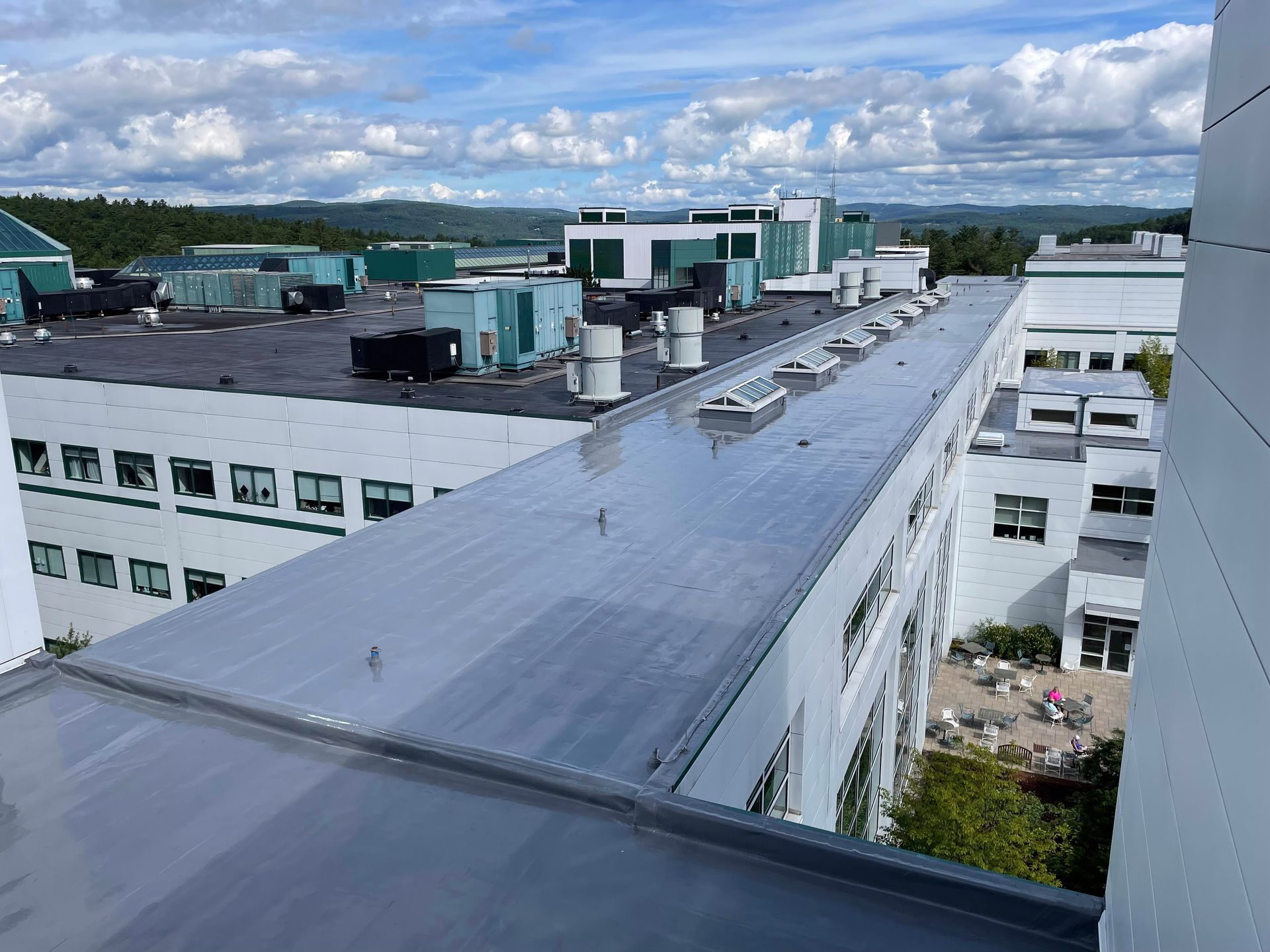
Unlike steep residential roofs that naturally shed water, commercial roofs rely on engineered drainage systems. Internal drains, scuppers, gutters, downspouts, and subtle slopes all work together to move water safely off the building. When one component fails, water doesn’t just sit — it ponds.
Ponding water adds significant weight to the roof structure, increases membrane deterioration, stresses seams, and accelerates material aging. Over time, this can lead to leaks, insulation saturation, and even structural concerns. Spring storms expose these vulnerabilities fast.
Key Areas to Evaluate Before Heavy Rains
- Roof Drains
Internal drains should be clear of debris, sediment, and roofing granules. Even partial blockages can restrict flow during a heavy storm. - Scuppers & Overflow Systems
Scuppers must remain unobstructed to allow water to exit properly. Overflow systems are especially critical — they act as a backup if primary drains are overwhelmed. - Gutters & Downspouts
Winter debris often accumulates in gutters. Blockages can cause water to back up onto the roof edge or cascade down building façades, damaging exterior finishes. - Low Spots & Settlement Areas
Over time, minor settlement or insulation compression can create low areas where water collects. These spots may not be obvious until water remains days after a rain event.
The Risk of Waiting
Many drainage-related issues remain invisible from the ground. By the time interior ceiling stains appear, insulation may already be saturated and mold risks increased. Emergency repairs during active storms are more disruptive and more expensive than preventative maintenance. A professional drainage check includes clearing debris, evaluating slope performance, inspecting seams and flashings near drains, and identifying early warning signs of ponding-related wear.
Protect Your Property Before the Storm Hits
Spring weather in Vermont can shift quickly from mild to severe. Preparing your commercial roof’s drainage system now reduces liability, protects tenants, and extends the life of your roofing investment. Preventative maintenance is always more cost-effective than reactive repair.